Europe: France
A Short History of the Galoubet/Tambourin in Provence
Europe: France
A Short History of the Galoubet/Tambourin in Provence
by Nick Blanton
In the Middle Ages and Renaissance the pipe and tabor tradition extended over most of western Europe; Provence, a region of France, was no exception. During the 18th century these instruments evolved into the galoubet (pipe) and tambourin (drum) that continue to be played today.
The tambourin and galoubet are associated with all the significant events in the life of an individual,
the family, a congregation, the community, the region and the country. They are especially involved
in calendar festivals (Mardi Gras, Easter, May, harvests, grape harvests, vigils, Christmas, etc.)
and rituals (birth, childhood, conscripts, weddings, death). So the repertoire shows an extraordinary diversity.Initially various sizes of drum (tambourin) were used. By the middle of the 18th century the long tambourin had become the preferred drum in Provence and surrounding area.
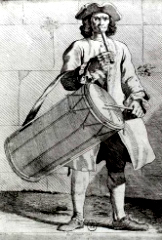
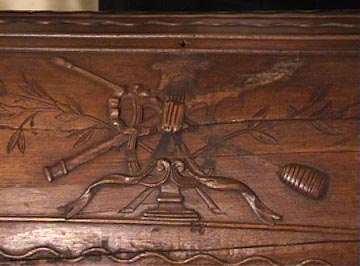
18th century tambourin
21st century Jean Pierre Miaule
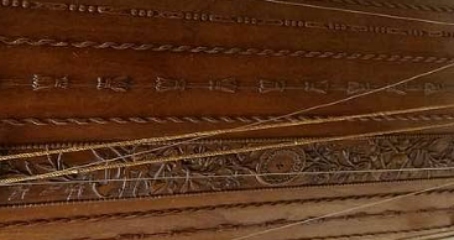
tambourinaire, Côtes d'Azur21st century tambourin decoration
The galoubet and tambourin (along with the hurdy-gurdy and bagpipe) were adopted for fashionable high-class genteel pastoral entertainments across France during the18th century. By the later 18th century the tuning of TTT had become most common for the galoubet. The tuning of what became the galoubet was the common TT 1/2T of the tabor pipe.
However, over time they became more and more a feature of Provence, in the extreme south-east
of the country. Here weddings, dances and festivals typically had one or more tambourinaires.
The galoubet was developed so it could be played chromatically with a fairly wide register
and so was able to play the sophisticated marches, minuets and contredanses published
and distributed throughout the region.source 1864 music book
A number of Galoubet instruction books have survived. One, 'The Diapason', 1772 contains instructions for the flute, piccolo, flageolet, tabor pipe, oboe, clarinet, bassoon, trumpet, French horn and serpent. It was republished in 1813.
In the mid 19th century there was a whole Provençal cultural revival, notably in urban areas
such as Marseille. So the galoubet/tambourin repertoire acquired the popular dance music
of polkas, waltzes and the often complex and arpegiatted styles. These are still popular today.Currently there is another revivial. The instruments are taught in numerous schools.
2016
2017 festival on the Cours Mirabeau
The repertoire has been broadened to include much early music, like the 16th century noëls in the collection of Notre Dame des Doms in Aivignon, and modern compositions. Maurice Guis, amongst others, has created music for ensembles and for galoubet/tambourin and piano.
'Le Galoubet-Tambourin - Instrument traditional Provence', by Guis M., T. Lefrancois, R. Venture, 1993
The history of galoubet-tambourine-type instruments of the musical tradition of Provence. This book highlights both the instruments themselves and their factors, their repertoire and instrumental practice of the classical period to today. It just as useful for learning about the folk traditions of Provence as for specialists.Electric bands mix galoubet/tambouri, or galoubet on its own with electric bass, guitar, synth and drum kit to create a strong Occitan / Provençal identity.
So in the 21st century there is again a diversity of sizes of instrument. Generally the most common galoubet for ensembles is that tuned TTT, starting on C5. Possibly the next popular is a lower one tuned TT 1/2T, starting on G4.
modern statuette by Gérard Lami
The tambourin is beaten with a stick called masseto. Some are very elaborate and may be of ebony
and ringed with bone or ivory. The massettos can even hide a perfume sponge (lavender essence)
which is said to relieve the nostrils of musicians when they passed through smelly neighborhoods.The galoubet has three holes (two above, one below).
The most expensive have mouthpieces and ferrules of bone or ivory.20th century galoubet
four tambourinaires playing for a dance display
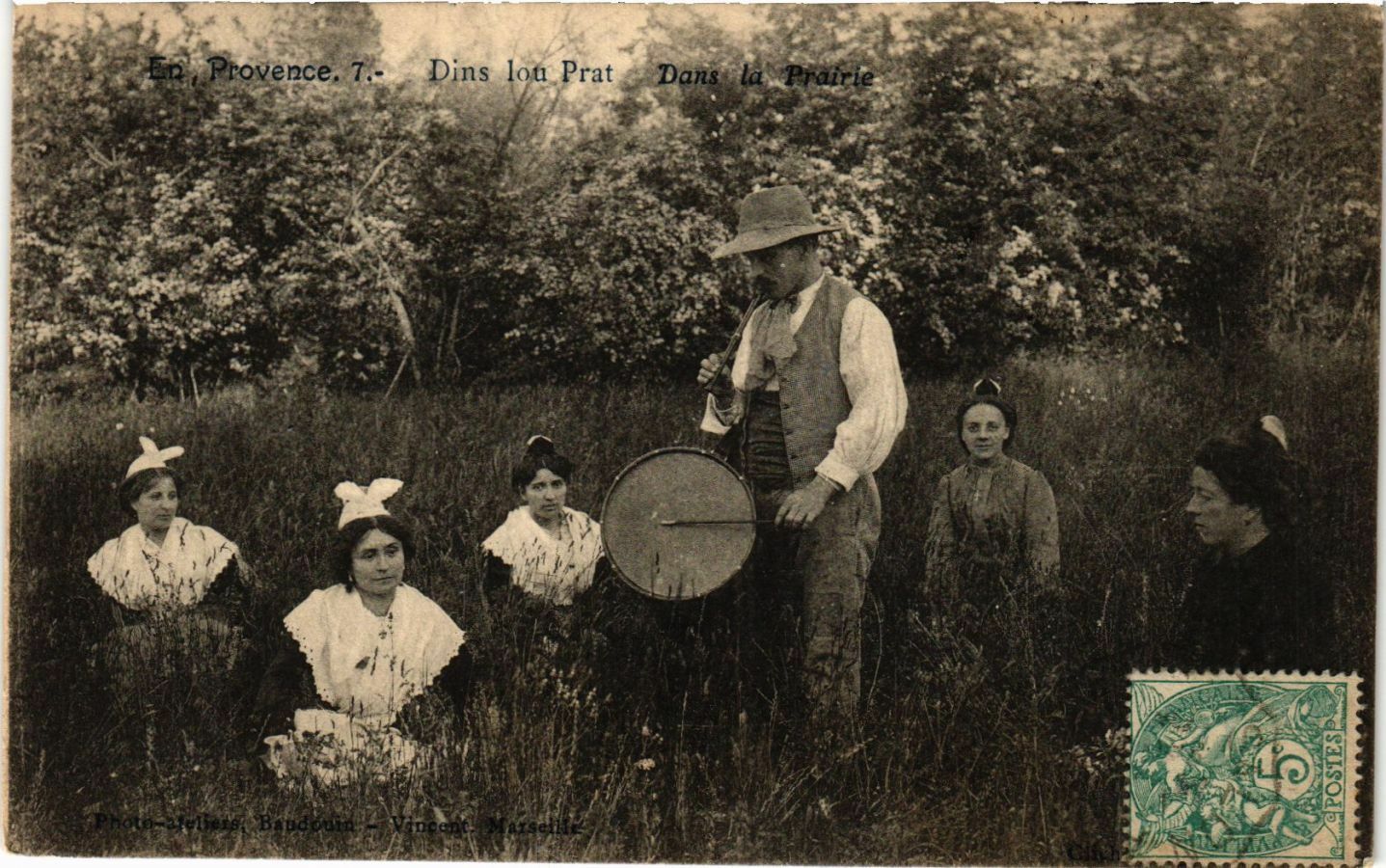
1920's postcard
2010
2018 music school Christmas concert
2019 concert in Bédoin, Vaucluse
They became popular during the French Revolution when churches were closed and the traditional
nativity scenes in churches were prohibited. The oldest santon Fair, started in Marseille in 1803.Around
one hundred workshops still carry on the tradition of making the santons de Provence.source
small figure
figure
figure
female
player
Under construction - more to be added
Edit and additions by Frances November 2009
updated October 2024


top of page